On Getting back into Routine
Hey Neurons,
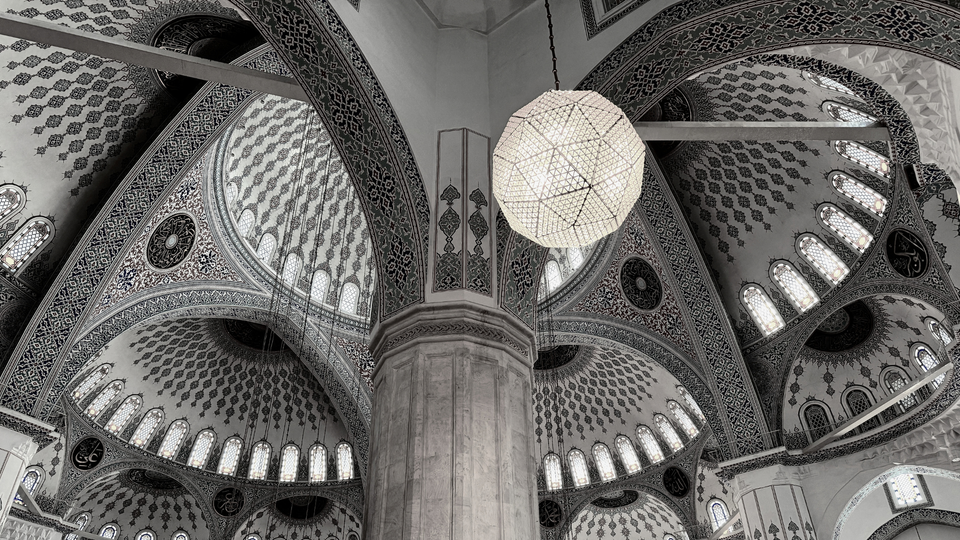
Recently, I have been traveling a little as one of my friends got married in Turkey. One of the things that holidays allow us to do is retreat from daily life and zoom out on our bigger goals. It is an ideal moment to reflect on whether you are generally moving in the direction with your life that you want to go towards. One exercise that I like to do at these times is the wheel of life, where you rate different areas of your life. For example, health, career and relationships. This allows you to reflect on if any facet of your life is unbalanced at the current moment.
However, what I have noticed is that after a holiday period, it is always tough to get back into a routine. In general, to keep up with science, there is high pressure to be working all the time. Therefore, the shock of coming back from a period of seemingly endless time to the day-to-day of high-stress pressures can be uncomfortable. I have been contemplating how we can ease into this transition and what we can do to make this period more bearable. One of the aids that I came up with is to reduce your daily routine to a minimal version.
The minimal routine
Most of us have many things that we want to achieve with our scientific work and do during the day. For example, a great routine might look something like this: reading a paper in the morning from 8–9, followed by an experiment in the morning from 9-12. In the afternoon, we move towards a few meetings, potentially reviewing some of the work of our colleagues, and ending the day with a deep discussion on the benefits of machine learning in mental health. However, this routine is not only packed but also ambitious. It requires us to be at peak cognitive performance the entire day. Thus, when coming back from holidays, where we might still be partly jetlagged, we might want to consider a minimal scientific routine that still brings us forward and allows for periods of deep contemplation, without the back-to-back appointments.
This might look like only performing the main experiment of that day and writing up the results, or just coding one figure for our paper. What this minimal routine allows us to do is focus on the most important work without depleting our energy levels. One of the questions we thus want to ask ourselves is what is the most important task I should be working on? Or if I achieved just one thing today what would move my scientific work forward the most?
Personally, I find science fun and enjoy spending quite some time on it, but when I try to push the boundaries and work into the late hours every day, I notice that my joy for the work starts to decrease. Everyone has a different energy budget, and although some of us might be able to work with dedication every day for a whole day, some of us need breaks between long periods of contemplation to keep the momentum moving forward.
The skip test
Another question that I was contemplating a lot during the holidays was raised in a podcast by Ali Abdaal. It was the “skip test,” which asks: would you want to skip this moment if you could and move straight to the result? Thus, if you are living your life day to day, which moments would you want to skip, or which days in the week would you want to skip if you could? For example, most of us would probably skip filling in admin, doing chores, and certain work tasks. However, if you want to skip entire days or weeks in your life, this is a clear sign that something is misaligned.
In science, I also think about this quite a lot. Although coding up experiments and reading through a difficult paper is hard, I think in essence I would not want to skip these moments. I find the struggle with new scientific ideas and discussing them with colleagues inherently quite rewarding. Getting the expected scientific result is, of course, the cherry on top, but not the main goal. I wonder, Neurons, when you ask yourself which moments you would like to skip, are there many? Or are you quite satisfied with how you are living your life now?
“Digital Minimalism A philosophy of technology use in which you focus your online time on a small number of carefully selected and optimized activities that strongly support things you value, and then happily miss out on everything else.” ― Excerpt From Cal Newport, Digital Minimalism